
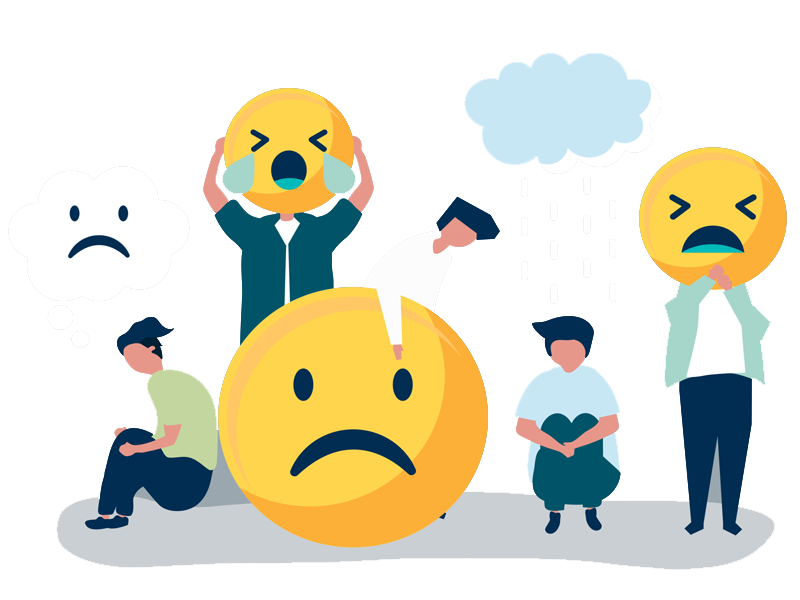

Major depressive disorder is one of the most common psychological disorders. A person suffering from this disorder feels intense sadness and the person’s performance in various fields decreases significantly. But it is interesting to know that this type of disorder is one of the most treatable mental disorders, which we will explain below.
MDD (Major Depressive Disorder)
The major depressive disorder has a significant negative impact on various aspects of a person’s life. In general, a person who is going through Major depressive disorder:
- He/She experiences deep feelings of sadness
- Loses interest in activities he used to enjoy.
- His performance in the environment of home, workplace, and society decreases significantly.
In addition to the impact, it has on the individual and social life of a person, Major depressive disorder causes a heavy economic loss to societies and governments; Because absenteeism and laziness in performing duties will ultimately cause a big blow to the country’s economy.
Major depressive disorder is a complex psychological condition, both for the person who has it and for the person who, as a therapist, is responsible for treating the affected person. In general, the main goal of treatment is for the person to be able to return to their normal state and normal life. Despite the fact that several factors affect the patient’s ability to recover and recover from this disorder, timely identification of this disorder by a specialist and his high accuracy in the treatment process is extremely necessary.
According to statistics from the World Health Organization, more than 264 million people (regardless of age) worldwide suffer from major depressive disorder, and this disorder is the leading cause of disability worldwide.
The prevalence rate of major depressive disorder in people between eighteen and twenty-nine years old is three times higher than the prevalence rate in people sixty years old and older. Also, the ratio of onset of this disorder in women, especially in early adolescence, has been reported to be 1.5 to 3 times that of men.
Causes of major depressive disorder
Major depressive disorder is a different condition than experiencing sadness. It is natural that the loss of a loved one, the loss of a job, or the end of a relationship, and such things that bring pain and suffering, lead to feelings of sadness, but this sadness can mean a depressive disorder. It is not, but experiencing negative emotions is natural and inherent to humans. Therefore, suffering from sadness and depression are common in some cases; Including the person’s inability to perform the activities that he used to do daily and naturally. Although grief and Major depressive disorder seem to overlap, there are some differences that allow the professional to reach the correct diagnosis.
Depression can affect anyone, even someone who seems to be living a relatively ideal life without any problems. Various factors can play a role in the occurrence of major depressive disorder, including the following:
Changes in the amount of some hormones in the brain may be effective in causing the symptoms of major depressive disorder.
Genetic background in people usually plays a role in the occurrence of depression, in identical twins, if one of them suffers from depression, the other will have a 70% probability of suffering from this disorder.
People who have low self-esteem, act impulsively, and generally show high negative excitability, are more at risk of major depressive episodes when facing difficult and difficult life situations.
Being exposed to constant violence, especially during childhood, experiencing stressful events, sexual and psychological abuse, physical abuse, and child neglect can be the cause of major depressive disorder in people.
Other psychological disorders can also increase the risk of developing Major depressive disorder. Things like psychoactive substance use disorder, some personality disorders, chronic physical diseases such as diabetes, obesity, and cardiovascular diseases, if they coexist with major depressive disorder, lead to the worsening of the disorder and increase the duration of treatment and recovery of the person.
What are the signs and symptoms of the major depressive disorder?
The signs and symptoms of this disorder, from mild to severe, can include the following:
Felt very sad, feeling empty, very hopeless, crying, and generally experiencing a depressed mood most of the day and almost every day for two weeks.
Loss of interest in doing things that the person used to enjoy doing, most of the day and almost all days for two weeks.
Severe sleepiness or insomnia throughout the day.
Dramatic changes in appetite and body weight without changes in diet.

Feeling extremely tired and lacking energy throughout the day.
Having mental restlessness or slowness – movement all day long so that the person is not only mentally involved in it and the signs and symptoms are clearly seen. In such a situation, a person is either restless and, in a rush, or numb and immobile.
Having excessive feelings of guilt and self-blame and worthlessness almost every day.
Reduced decision-making power, lack of concentration, and reduced thinking power every day.
Thinking about the worthlessness and meaninglessness of life, can lead to suicidal thoughts or planning for it.
Conclusion
If you feel that you have the symptoms of this disorder, don’t be afraid at all and see a specialist immediately. Some activities can boost your mood, including:
- Music or painting
- doing yoga
- Massage therapy
- Stress and anxiety management
- Avoid smoking and alcohol
- Eating healthy foods
Writing thoughts, feelings, and memories The persistence of depression can cause a lot of damage to a person and his life. It is better to take this disorder seriously